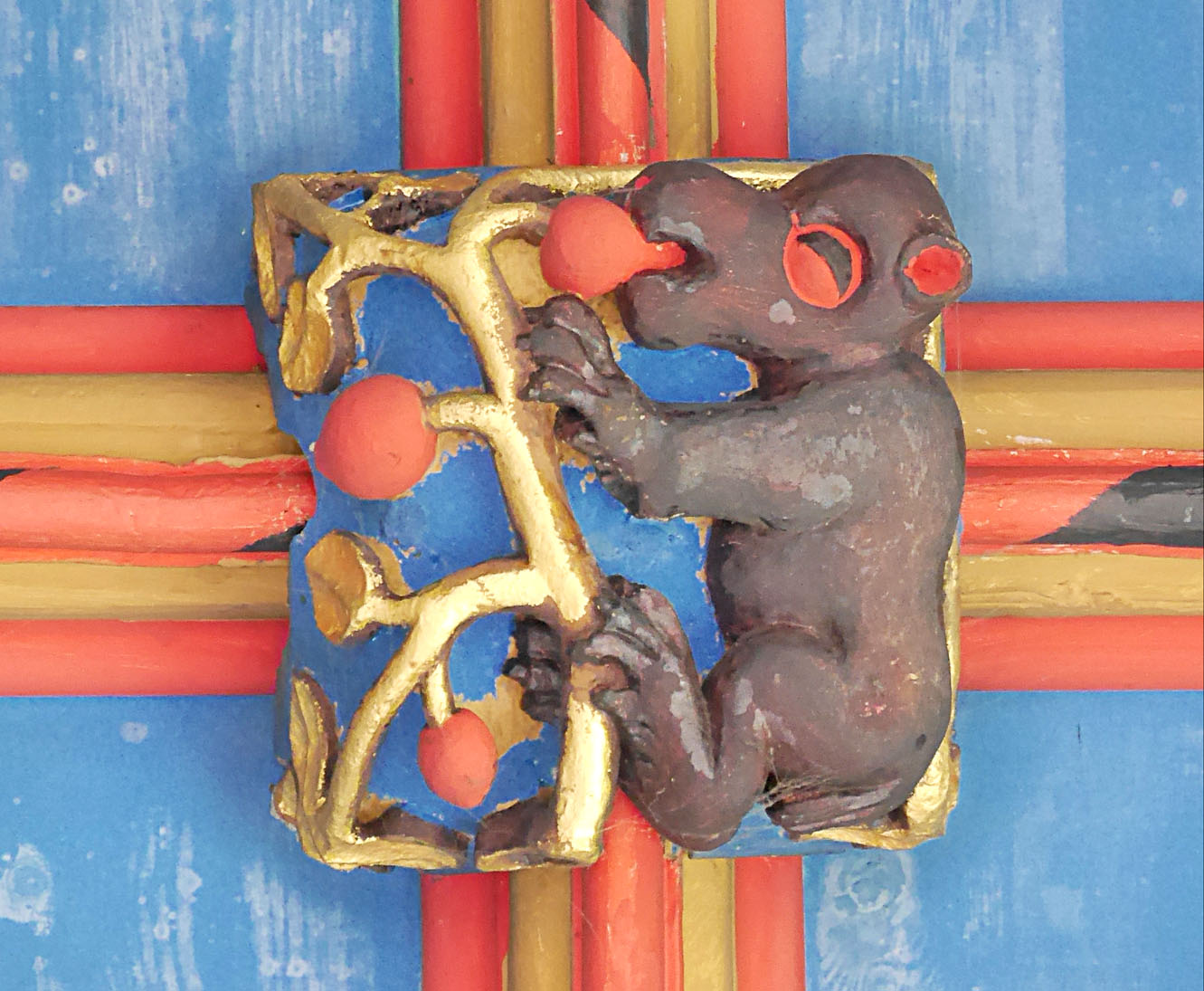
St Mary’s Church includes an extraordinary collection of over 600 15th century carved wooden roof bosses distributed throughout the ceilings. The bosses are a vibrant visual record chronicling the life, times, stories, hopes and dreams of our medieval predecessors, and are unique in both design and their astonishing number – indeed we are proud to be home to one of the largest such collections in a Parish Church in the UK.
Explored collectively, the bosses enable us to build a greater understanding medieval life and culture in Beverley. They also teach us about the use of art and its underlying folklore, and the interplay between Christianity, myth and legend. The bosses are intricate, colourful, beautifully foliated designs and were (and indeed still are) an important method of storytelling without words, in a world which had high levels of illiteracy. Each one is indicative of the beliefs and experiences of the medieval craftsmen who carved them, and their function was not only to educate but also to entertain.
Some have a clear connection to Biblical stories (e.g. Jonah and the Whale), others sought to offer moral guidance, and many contain more obscure ancient symbolism – such as the miraculous unicorn, devious alewife and cunning fox. The meanings of these are more obscure to a modern audience but would have been immediately and richly evocative to medieval people. There are also a number of humorous and ‘rude’ bosses – the face of a man peers down at you, his tongue protruding from his mouth, another carving defecates on the unknowing crowds gathered below – these are similar to carvings within York Minster, where like St Mary’s, the crude and grotesque is displayed alongside moral instruction, bringing the whole of life into the church.
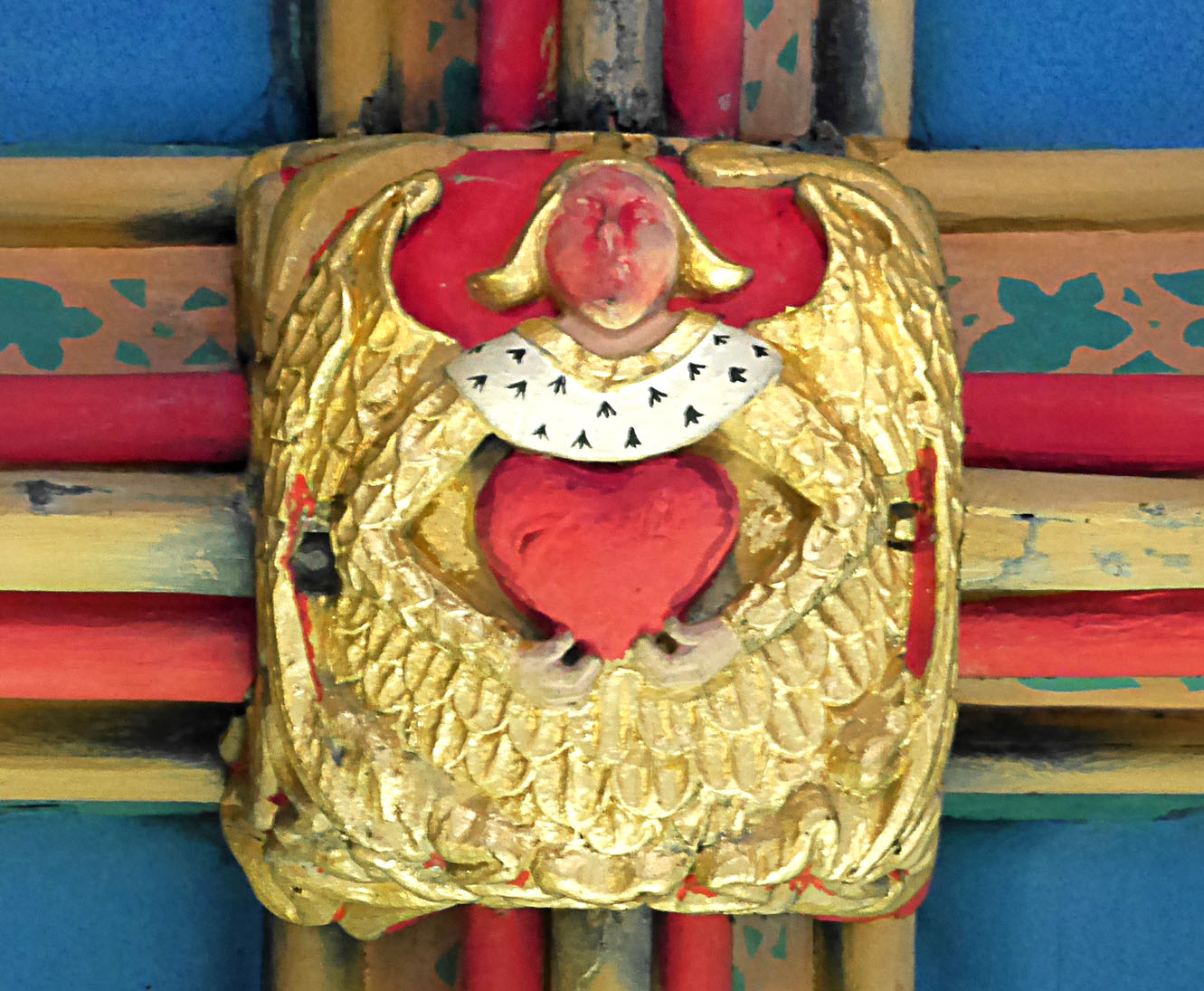
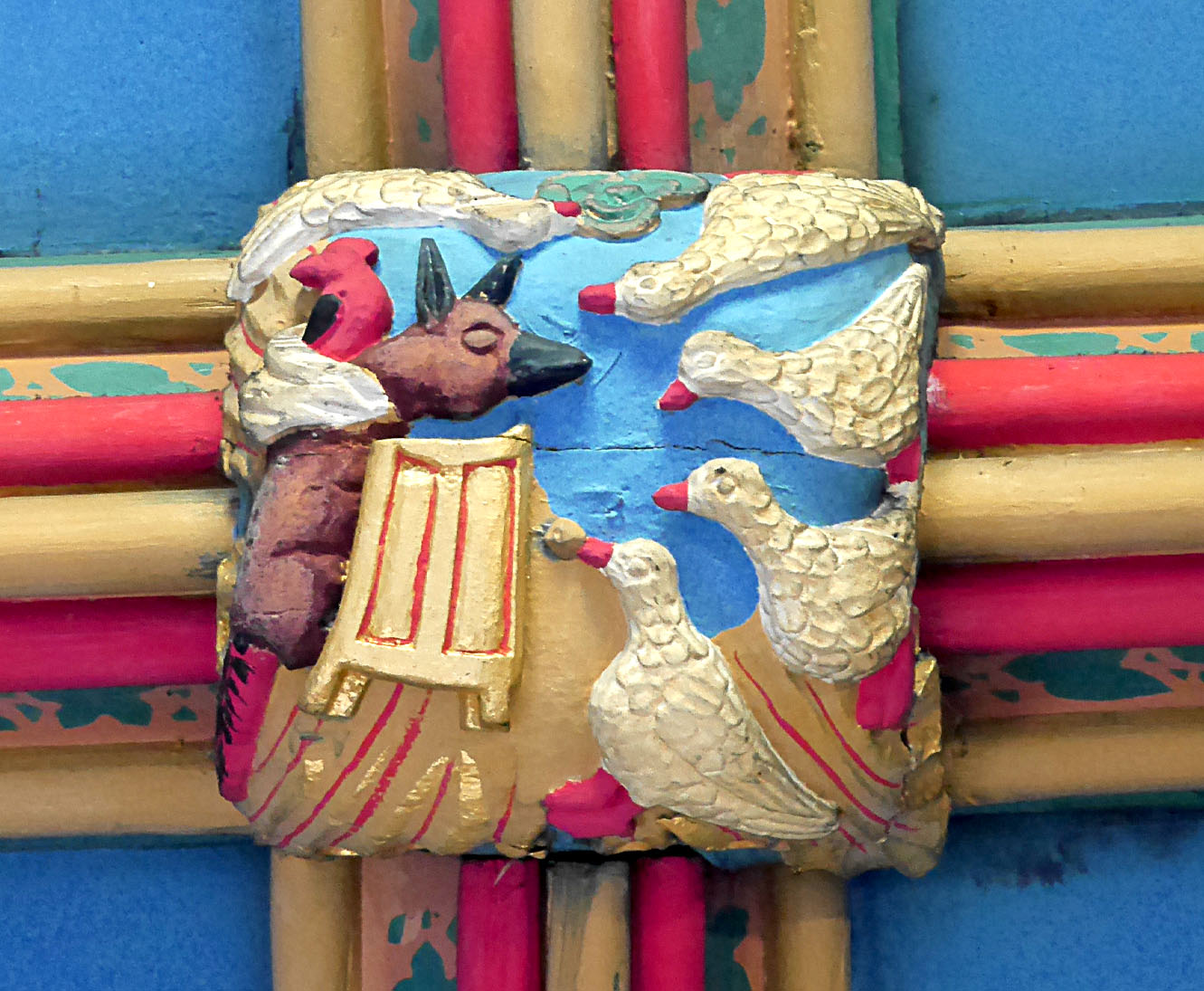
Medieval folklore and fables are a central to many of St Mary’s bosses. The boss depicting Reynard the Fox (a popular character known for his devious and cunning nature) is no doubt an attempt by the carver to satirise the corruption of the Christian church at the time and points to the local stories of hostility and suspicion towards to the monks of the priory (now Beverley Minster). Elsewhere bosses of lions are used to represent Christ, who like the lion in medieval literature never sleeps and keeps his divinity alive even on the cross. Our dragons recall many medieval legends – such as that of Saint Margaret of Antioch and St George – as well as alluding to popular chivalric romances of the time. The unicorn symbolised purity and the value of virginity and chastity – a unicorn could be harnessed by a single hair from the head of a pure maiden.
Subsequently, the original symbolism has been interpreted and reinterpreted so that they are still of significance in the present day. Understanding the symbolic power of the lion is central to our reading of literature such as the Lion, the Witch and the Wardrobe by C.S. Lewis. Likewise, the phoenix – a mythical creature representing immortality in medieval literature – is recast as Fawkes in Harry Potter by J.K. Rowling.
Dragons play important roles in film and theatre and unicorns in contemporary symbolism and children’s literature (as pointed out by Dr Emma Wells Associate Lecturer, University of York).
St Mary’s is therefore home to a collection of bosses which are extraordinary individual pieces of artwork, but which collectively bring together folk-legends classical sources and patristic writings that incorporated Christian allegory and moralisation and helped people make sense of the world in which they lived. This unique heritage tells not only of the lives, hopes and dreams of the past, nor is it simply an opportunity to explore the use of art and its underlying folklore, it also prompts us to explore the symbolism in our own society and causes us to reflect on what it says about our own understanding of humanity and creation.
The images of people, animals, mythical creatures and legends within the bosses are complimented by the other extensive heritage contained within St Mary’s walls; our fifteenth century misericords also depict medieval creatures and life, whilst other stone carvings through the building are (like the bosses) significant depictions of the humour of the age.
Likewise, Professor Brigitte Resl (Dean of the Faculty of Arts, Cultures and Education, University of Hull) comments: “The ceiling bosses at St Mary’s Beverley offer extremely valuable insights into medieval culture in all its variety. They are a significant resource for academic research. Since their creation they have served as tools for education and sources for entertainment for the local community and visitors from across the world. “
The scale of our collection makes it of national, as well as regional importance, thus any loss would be catastrophic in terms of developing our understanding of our predecessors, their craftsmanship, skill, stories and worldviews, as well as impacting on our ability to decode the bosses’ medieval symbolism. This would not be felt only by the academic community and art world, but to anyone who loves or appreciates art, history, story and imagination.
Furthermore, these bosses are part of the offering that St Mary’s gives to the town in terms of attracting visitors:
“The ceiling bosses at St Mary’s, Beverley are unequalled in their ability to communicate medieval life and times. Their loss would be disastrous not only for the academic community, but for educational purposes and the wider local community and visitors, not to mention the significant economic gains to Beverley and the East Riding that such an extraordinary place of worship brings through tourism. It is essential that this heritage is preserved so it can continue to serve these important functions over the years to come.” Dr Suzanne E. Beech (Lecturer in Human Geography University of Ulster)
Furthermore, given the fact that these pieces of artwork are within a parish church, they are ‘owned’ by all who visit including tourists, school visits, those living in Beverley, the East Riding and beyond, as well as those who count themselves as part of the community of St Mary’s.