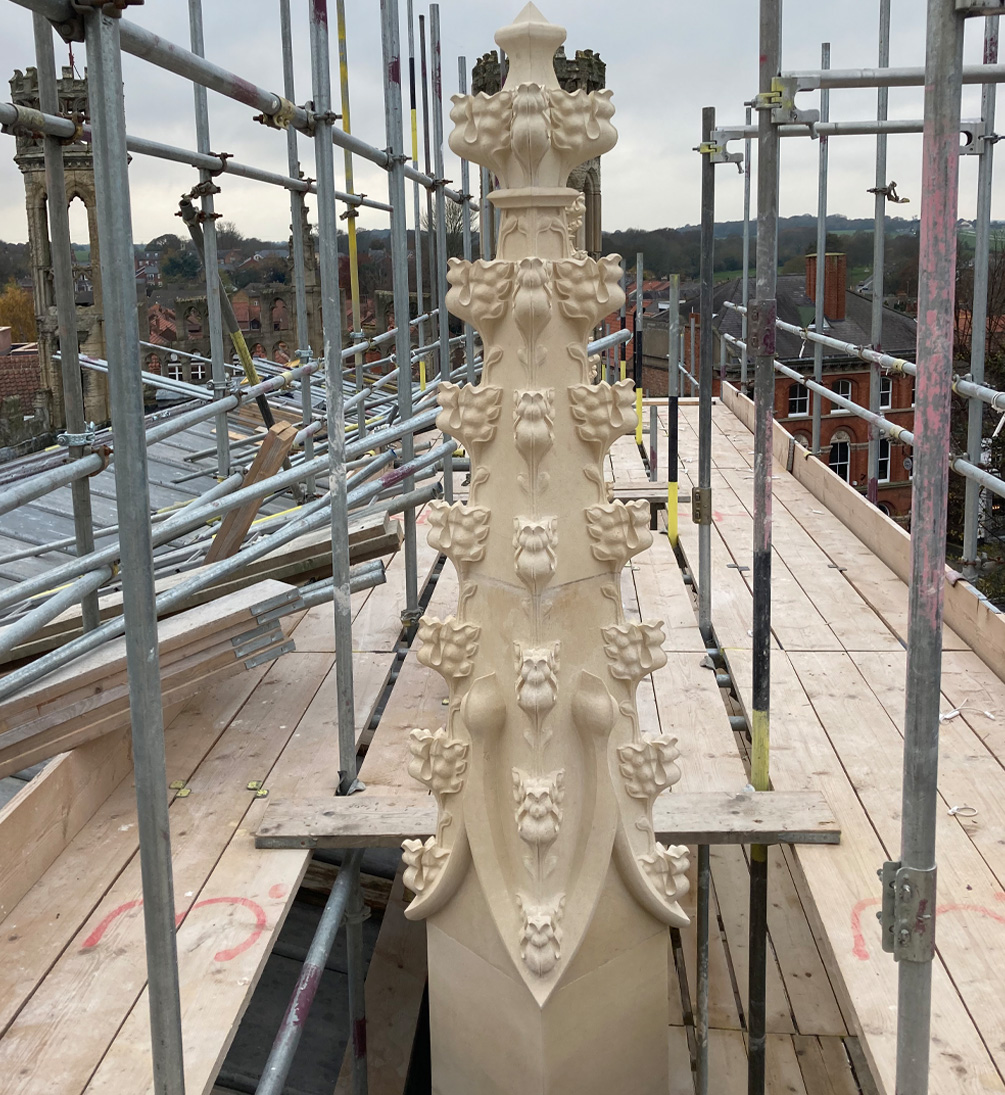
The sheer scale of the repairs needed across the building is partly due to the age of the building and partly due to the sheer size of the building which is larger than several cathedrals.
Due to the large amount of work required we have taken the decision to break down the work into manageable sections. In the last ten years we have addressed significant problems in the nave and on the roof including dangerous pinnacles, fragile windows and water ingress into the nave.
We have addressed drainage problems throughout the building, installed accessible toilets and in total raised and spent £2.4m on restoration and development of the building partly in thanks to a National Lottery Heritage grant. While this work has significantly improved and extended the lifespan of the immediate areas of stonework, it also uncovered the fragility of the surrounding stones and the need to continue the work which we have commenced.
During the restoration of the north clerestory the project architect advised that “the adjacent stonework remains as bad; very eroded pinnacles, thin eroded parapets and badly eroded window surrounds and leaky windows” If these urgent repairs are not carried out the building will continue to deteriorate, and the rates of erosion and decay will increase. More open joints will allow water deeper into the fabric leading to instability in the walls which could lead eventually to partial collapse of elements of the building and possible closure of the church. Inevitably, should the urgent repairs not be undertaken, an additional consequence would be deterioration of the beautiful artwork upon the ceilings or its complete loss.
In short: without action the building will continue decaying with the risk of significant loss of heritage.